Antarctica was one of the last places without nanoplastics. Not anymore
A new study has found nanoplastic particles in the soil of Antarctica's McMurdo Dry Valleys, closing one of the last gaps in global plastic pollution research.
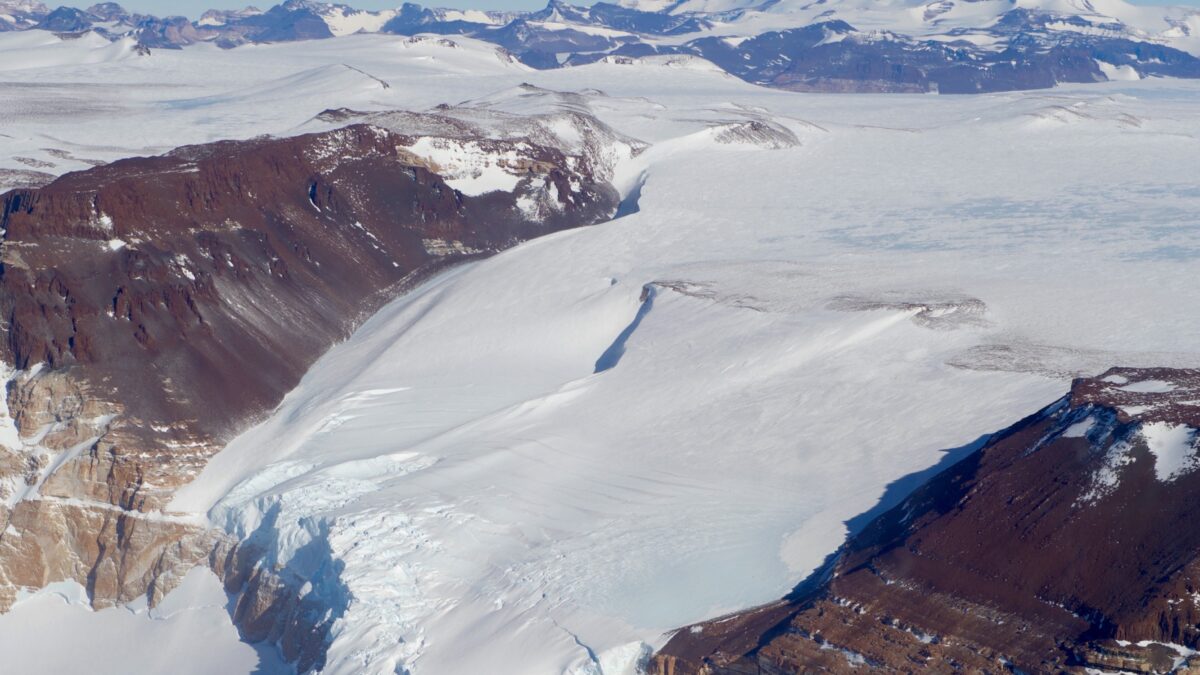
Antarctica has long been regarded as one of the world’s most pristine environments because it has no permanent population, no history of industrialisation, and only a limited human presence through scientific research stations. That reputation just took a hit: researchers have found nanoplastics in Antarctic soil for the first time.
The discovery, published in Scientific Reports, was made in soils from the McMurdo Dry Valleys, one of the coldest and driest regions on the planet. Although previous studies had already documented macroplastics and microplastics in Antarctic seawater, sediments, glaciers, sea ice, snow and coastlines, little was known about plastic contamination in inland soils and land surfaces. The new study fills part of that gap, identifying particles including tyre-wear fragments and five other common plastics used in everyday products.
Finding nanoplastics in soil is notoriously difficult. Unlike larger plastic fragments, nanoplastics occur at extremely low concentrations and are hard to separate from soil particles, and earlier detection methods struggled because plastic particles clumped together, mixed with soil materials, and were not sensitive enough to detect very small amounts. The research team used a technique called thermal desorption-proton transfer reaction-mass spectrometry, which is capable of detecting nanoplastics at nanogram levels — for context, one nanogram equals 0.000000000001 kilograms.
Researchers collected soil samples from the Taylor and Wright valleys during January 2023, analysing 13 topsoil samples and four deeper samples. Nanoplastics were detected above the method’s detection limit in 54 percent of the topsoil samples, with the highest concentration reaching 295 nanograms per gram of soil.


Leave a Reply