A 72-second radio signal from 1977 still has no explanation, and scientists are still looking
Nearly 50 years after Ohio's Big Ear telescope picked up the mysterious 'Wow!' signal, astronomers still cannot confirm what produced the unexplained 72-second transmission.
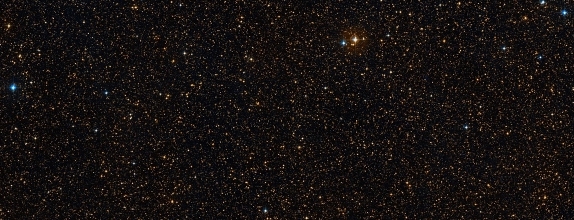
For just 72 seconds on the night of August 15, 1977, a radio telescope in rural Ohio picked up one of the most extraordinary signals ever recorded. It wasn’t an ordinary burst of radio noise or a familiar astronomical source — it was an unusually strong, narrowband signal arriving from the direction of the constellation Sagittarius, close to the 1,420 MHz hydrogen line, a frequency long considered one of the most likely channels an intelligent civilisation might use to communicate across interstellar distances.
When astronomer Jerry Ehman reviewed the computer printout several days later, he circled the sequence “6EQUJ5” and scribbled a single word in the margin: “Wow!” Nearly five decades later, scientists are still debating what produced it.
What made the detection so remarkable was not simply its strength, but how closely it matched what researchers participating in the Search for Extraterrestrial Intelligence (SETI) expected a distant artificial transmission might look like. The signal gradually increased and decreased in intensity exactly as a fixed celestial source would while passing through the Big Ear radio telescope’s field of view. It also occupied an extremely narrow radio frequency, unlike most naturally occurring cosmic radio emissions, and lasted for the telescope’s full 72-second observing window before disappearing completely. Despite decades of follow-up observations by multiple radio observatories, the signal has never been detected again.
Over the years, scientists have proposed numerous explanations, ranging from human-made interference and instrumental errors to hydrogen clouds surrounding comets, rare astrophysical events, and, inevitably, the possibility of an extraterrestrial transmission. None has been confirmed conclusively. Because the signal occurred only once and could never be reproduced, researchers have been unable to gather the additional evidence needed to identify its true origin.




Leave a Reply